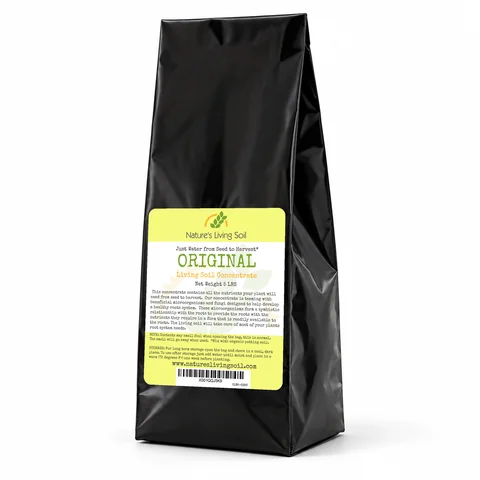
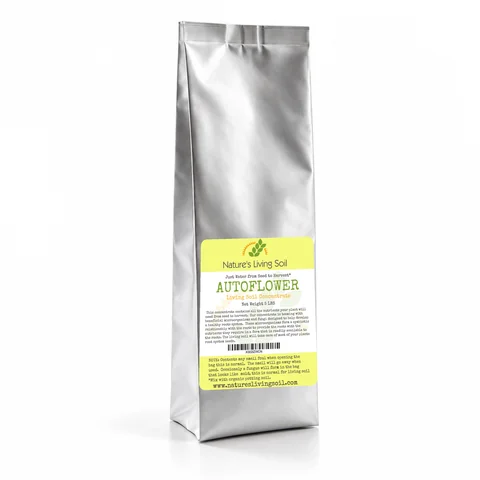
For a fresh soil mix only. For top feeding, compost tea or reused soil, use the separate directions or ask NLS.
Original Recipe & Autoflower
You need your NLS concentrate, organic potting soil, a pot with drainage holes, a scale and water. Concentrate is a strong blend you add to soil. It is not a bag of potting soil.
For a new pot, choose ONE way: put the NLS mix in the bottom layer, or mix it through the whole pot. For a full pot, both ways use the same amount of concentrate. For a partly filled pot, follow the volume instructions for the method you choose. “Plain soil” means organic potting soil with no NLS concentrate mixed into it.
SEE HOW IT WORKS
Original Recipe & Autoflower: visual guide
Go at your own pace
Original Recipe & Autoflower
Weigh
Use a scale
Use a scale for ounces by weight.
Step 1 of 4
Check the size of your pot. Use a scale to weigh 3.2 oz of NLS concentrate for each gallon the whole pot holds. For a 5-gallon pot, use 16 oz (1 lb).
Amount to use3.2 oz of concentrate by weight per gallon of total container volume.
Choose this method OR the whole-pot method. Do not do both. Picture your pot in three equal layers: the NLS mix goes in the bottom layer.
Super Soil Method — mix into the bottom layer
3.2 oz of concentrate by weight per gallon of total container volume.
Check the size of your pot. Use a scale to weigh 3.2 oz of NLS concentrate for each gallon the whole pot holds. For a 5-gallon pot, use 16 oz (1 lb).
In a separate container, mix that concentrate with enough organic potting soil to fill the bottom third of your pot. Stir it well.
Put the mix in the bottom third of your pot. Fill the rest with plain organic potting soil. Do not add more concentrate to this top layer.
Plant in the plain soil at the top. Then water your plant.
Choose this method OR the whole-pot method. Do not do both. Picture your pot in three equal layers: the NLS mix goes in the bottom layer.
Living Soil Method — mix through the whole pot
3.2 oz of concentrate by weight per gallon of soil you are preparing.
Measure how much soil you will use. Weigh 3.2 oz of concentrate for each gallon of soil. For 5 gallons of soil, use 16 oz (1 lb). If a 5-gallon pot holds only 3 gallons of soil, use 9.6 oz. Do not count the empty space.
Mix the concentrate evenly into the organic potting soil. Fill your pot with this mix.
Make a hole in the mix about the size of a 16-fluid-ounce drinking cup. Fill this hole with plain organic potting soil. Put your plant in this plain-soil spot, then water.
Choose this method OR the bottom-layer method. Do not do both. The plain-soil spot gives your plant a place to start.
Top feeding — sprinkle on the soil
1 tablespoon of concentrate per plant.
Measure 1 tablespoon for each plant. Sprinkle it on top of the soil, then water.
Repeat every few waterings. If you have already added other plant food, ask NLS before adding more.
Use these steps for Original Recipe, Autoflower or Katie’s Vegan Soil. Girl Flower Power has different directions.
Compost tea — mix the concentrate with water
Per gallon of water: 2 tablespoons of concentrate. Optional but recommended: 2 tablespoons of unsulfured blackstrap molasses.
Add 2 level tablespoons of concentrate to 1 gallon of water. Do not use heaping spoonfuls. If using molasses, add 2 tablespoons of unsulfured blackstrap molasses.
Let the mix sit for 2–8 hours. Stir it now and then. If you need to adjust the pH (how acidic the water is), use a target of 6.5.
The first time, use a half dose. Ask NLS how much of the finished tea to give your plant before you pour it on.
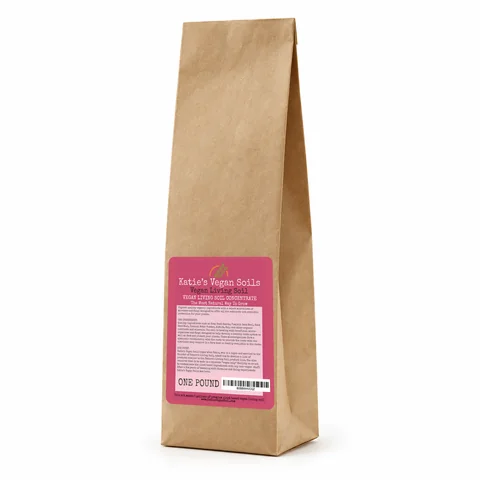
Katie’s is a concentrate made without ingredients from animals. Mix it with organic potting soil. You also need a pot with drainage holes, a scale and water.
“Plain soil” means organic potting soil with no NLS concentrate mixed into it. For a new pot, choose ONE of the two mixing methods below. To keep the whole mix vegan, check that your potting soil and other additions have no ingredients from animals.
SEE HOW IT WORKS
Katie’s Vegan Soil: visual guide
Go at your own pace
Katie’s Vegan Soil
Weigh
Use a scale
Use a scale for ounces by weight.
Step 1 of 4
Check the size of your pot. Use a scale to weigh 3.2 oz of NLS concentrate for each gallon the whole pot holds. For a 5-gallon pot, use 16 oz (1 lb).
Amount to use3.2 oz of concentrate by weight per gallon of total container volume.
Choose this method OR the whole-pot method. Do not do both. Picture your pot in three equal layers: the NLS mix goes in the bottom layer.
Super Soil Method — mix into the bottom layer
3.2 oz of concentrate by weight per gallon of total container volume.
Check the size of your pot. Use a scale to weigh 3.2 oz of NLS concentrate for each gallon the whole pot holds. For a 5-gallon pot, use 16 oz (1 lb).
In a separate container, mix that concentrate with enough organic potting soil to fill the bottom third of your pot. Stir it well.
Put the mix in the bottom third of your pot. Fill the rest with plain organic potting soil. Do not add more concentrate to this top layer.
Plant in the plain soil at the top. Then water your plant.
Choose this method OR the whole-pot method. Do not do both. Picture your pot in three equal layers: the NLS mix goes in the bottom layer.
Living Soil Method — mix through the whole pot
3.2 oz of concentrate by weight per gallon of soil you are preparing.
Measure how much soil you will use. Weigh 3.2 oz of concentrate for each gallon of soil. For 5 gallons of soil, use 16 oz (1 lb). If a 5-gallon pot holds only 3 gallons of soil, use 9.6 oz. Do not count the empty space.
Mix the concentrate evenly into the organic potting soil. Fill your pot with this mix.
Make a hole in the mix about the size of a 16-fluid-ounce drinking cup. Fill this hole with plain organic potting soil. Put your plant in this plain-soil spot, then water.
Choose this method OR the bottom-layer method. Do not do both. The plain-soil spot gives your plant a place to start.
Top feeding — sprinkle on the soil
1 tablespoon of concentrate per plant.
Measure 1 tablespoon for each plant. Sprinkle it on top of the soil, then water.
Repeat every few waterings. If you have already added other plant food, ask NLS before adding more.
Use these steps for Original Recipe, Autoflower or Katie’s Vegan Soil. Girl Flower Power has different directions.
Compost tea — mix the concentrate with water
Per gallon of water: 2 tablespoons of concentrate. Optional but recommended: 2 tablespoons of unsulfured blackstrap molasses.
Add 2 level tablespoons of concentrate to 1 gallon of water. Do not use heaping spoonfuls. If using molasses, add 2 tablespoons of unsulfured blackstrap molasses.
Let the mix sit for 2–8 hours. Stir it now and then. If you need to adjust the pH (how acidic the water is), use a target of 6.5.
The first time, use a half dose. Ask NLS how much of the finished tea to give your plant before you pour it on.
Girl Flower Power adds plant food during flowering. You can sprinkle it on the soil or mix it with water to make compost tea. It contains ingredients from animals.
SEE HOW IT WORKS
Girl Flower Power: visual guide
Go at your own pace
Sprinkle on top
Thin layer of NLS
Your growing soil
Use the amount shown in the directions.
Step 1 of 3
Measure about 1 tablespoon for each plant. Spread it in a thin layer on top of the soil.
Amount to useAbout 1 tablespoon of Girl Flower Power per plant.
If you have already added other plant food, ask NLS before adding more.
Top dressing — sprinkle on the soil
About 1 tablespoon of Girl Flower Power per plant.
Measure about 1 tablespoon for each plant. Spread it in a thin layer on top of the soil.
Water your plant as you normally would.
Repeat every few waterings.
If you have already added other plant food, ask NLS before adding more.
Compost tea — mix with water
Per gallon of water: 2 heaping tablespoons of Girl Flower Power. Optional but recommended: 2 tablespoons of unsulfured blackstrap molasses.
Mix 2 heaping tablespoons of Girl Flower Power into 1 gallon of water. If using molasses, add 2 tablespoons of unsulfured blackstrap molasses.
Let it steep for 2–8 hours, stirring now and then. Adjust to pH 6.5 if needed.
Use the finished tea to water your plant with the amount you normally use. Pour it onto the soil from the top.
Ask NLS how often to use tea; do not assume it replaces every watering. The top-dressing schedule does not apply to tea. For bottom-watering or SIP systems, apply Soil Revival and compost teas from the top directly to the growing medium/root zone. Do not add them to the water reservoir unless a current, system-specific NLS instruction explicitly permits it. Plain water may continue through the reservoir according to the container system’s normal operation.
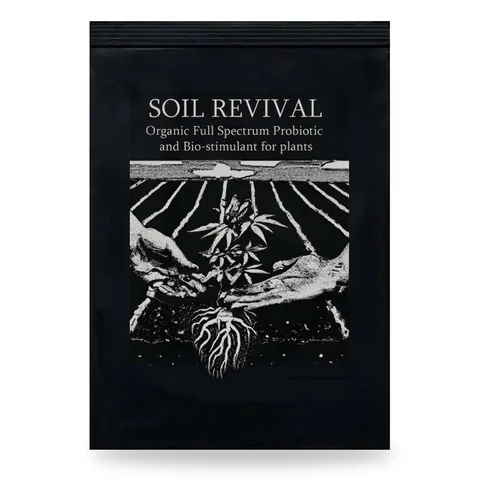
First, mix Soil Revival powder with water. Then measure how much of that liquid to give your plant. The powder amount and the watering amount are two different measurements.
SEE HOW IT WORKS
Soil Revival: visual guide
Go at your own pace
Choose the option that fits your setup. These are alternatives, not steps to do together.
Soil Revival
Mix into
Water + ingredients in the step
Choose one strength. Measure powder first, then water.
Option 1 of 3
Mild mix: stir ½ teaspoon of powder into 1 gallon of water.
Choose the strength named in the directions for your plant below. Use water at 72–76°F. Use the mixed liquid within 12 hours. The compost-tea directions have a shorter time limit.
Step 1: choose one strength and mix with water
Mild mix: stir ½ teaspoon of powder into 1 gallon of water.
Regular mix: stir 1 teaspoon of powder into 1 gallon of water.
Strong mix: stir 2 teaspoons of powder into 1 gallon of water.
Choose the strength named in the directions for your plant below. Use water at 72–76°F. Use the mixed liquid within 12 hours. The compost-tea directions have a shorter time limit.
Step 2: choose the use that matches your plant
Plants growing in soil: once a week, pour 6–12 fluid ounces of the regular mix onto the soil around each stem.
Plants growing in coco or another soil-free mix: once a week, pour 5–10 fluid ounces of the regular mix around each stem. Coco is a growing material made from coconut husks.
After moving a plant to a new pot: pour 6–10 fluid ounces of the strong mix around its stem.
Spraying leaves: use the mild mix. Stop using it as a leaf spray once buds have started to form.
Seedlings (young plants): use the regular mix at each watering for two weeks. For each seedling in soil, use 4–6 fluid ounces. For each seedling in coco, use 2–4 fluid ounces. Pour around the stem, with little or no liquid draining out of the pot.
Choose the line that matches your plant. These are different uses, not steps to do one after another. Ask NLS if you are unsure which amount fits your pot.
Get old soil or other growing materials ready
Old soil: add the strong mix until the soil is damp. Repeat one or two times using the mild mix. Keep the soil damp until you use it.
Dry coco: use the strong mix to wet it again. For clay pellets or other soil-free materials, add the strong mix until they are wet.
This adds microbes, the tiny living things that work in soil. Old soil may also need more plant food. Ask NLS how to prepare it for another plant.
Add Soil Revival to compost tea you already made
1 tablespoon of Soil Revival per gallon of already-prepared compost tea.
Stir 1 tablespoon of Soil Revival into each gallon of finished compost tea. Wait 15 minutes before using it.
Use this mix within 6 hours.
Start with tea you have already made. Ask NLS how much to give your plants and how often.
When a newly opened bag of NLS concentrate smells, distinguish the odor before choosing the handling advice. If it smells like ammonia, open the bag and let the concentrate air out before mixing it into soil. Do not substitute immediate mixing or optional overnight rest for the ammonia-airing step. If it smells like manure or poop, that anaerobic opening smell is common because oxygen is limited inside the sealed bag. Mix the concentrate into the soil following the directions for that product and preparation method, then allow one or two days for the smell to dissipate after mixing. If desired, let the mixed soil sit overnight before using it; this is optional, not a required waiting or curing period. Separate airing is not needed for the manure-like smell. If the customer only says awful, bad or strong without identifying the smell, explain both branches briefly and ask whether it is ammonia-like or manure-like; do not assume either or declare the product unusable from odor alone. Do not invent a product identity or mixing dose. For unused concentrate being stored, the separate guidance remains: one-year shelf life, potentially longer if stored properly; keep the bag sealed in a cool, dry place. Apply this guidance to concentrate opening odor, not prepared liquids, waterlogged planted soil or independently reported contamination. If the smell persists after the applicable handling or the customer reports a separate product problem, ask NLS for help rather than extending reassurance indefinitely.
Girl Flower Power arrived frozen
If Girl Flower Power arrives frozen, let it thaw, then keep it at 70°F or warmer for a few days. No guaranteed outcome for every damaged or contaminated bag is established by this handling instruction.
Using a bottom-watering container
For bottom-watering or SIP systems, apply Soil Revival and compost teas from the top directly to the growing medium/root zone. Do not add them to the water reservoir unless a current, system-specific NLS instruction explicitly permits it. Plain water may continue through the reservoir according to the container system’s normal operation.
Need help with your setup?
Tell us which NLS product you have, what soil you use, how big your pot is and what you have added so far. We can help you choose the right steps.